Friday, March 12, 2010

2010 Doug Wright Award Nominees


So, the list of nominees for the Wright Awards was released today. I was on the nominating committee again this year which was alot of fun and a great privilege. The newest member of the committee was Sean Rogers who writes about comics for The Walrus magazine and provided the Wrights with a necessary kick in the ass in terms of his wide-ranging comics and cultural interests, youthful exuberance, and superfine taste. These skills came in handy for the long discussions we had about the potential nominees, what books to include in what category, and what exactly qualifies as comics. The result is a very diverse list of awesome books and cartoonists, some of whom were unknown to me before the deliberations began. I'm also pretty excited about the new location for the awards this year, the brand-spanking new Bram and Bluma Appel Salon, located on the top floor of the Toronto Reference Library where TCAF is being held.

I think Max at Sequential was the first to kick out the press release but you can check out the whole awards site here.

6th annual awards to be handed out as part of Toronto Comics Arts Festival

March 12, 2010 Toronto- Running the gamut from the acclaimed to the unconventional, the 15 finalists for this year's Doug Wright Awards were announced today in Toronto.

Hand-picked by an esteemed panel of comics experts, the 2010 finalists represent the finest, most thought-provoking work produced by Canada's vibrant comics community.

The shortlist contains works that explore diverse subjects, from the legendary life of Kasper Hauser and the fictional life (and death) of a fading TV host, and spans a range of formats, from wordless lino-cuts graphic novels to "manga" inspired by Western Canadian Haida mythology.

The Doug Wright Awards finalists for Best Book are:

* Back + Forth by Marta Chudolinska (The Porcupine's Quill)
* George Sprott: (1894-1975) by Seth (Drawn and Quarterly)
* Hot Potatoe by Marc Bell (Drawn and Quarterly)
* Kaspar by Diane Obomsawin (Drawn and Quarterly)
* Red: A Haida Manga by Michael Nicoll Yahgulanaas (Douglas and McIntyre)

The Doug Wright Awards finalists for Best Emerging Talent are:

* Adam Bourret I'm Crazy
* Michael DeForge Lose #1 (Koyama Press), Cold Heat Special #7 (Picturebox)
* Pascal Girard Nicolas (Drawn and Quarterly)
* John Martz It's Snowing Outside. We Should Go For a Walk.
* Sully The Hipless Boy (Conundrum Press)

The finalists for the 2010 Pigskin Peters Award (for unconventional, "nominally-narrative" comics) are:

* Bébête Simon Bossé (L'Oie de Cravan)
* Dirty Dishes by Amy Lockhart (Drawn and Quarterly)
* Hot Potatoes by Marc Bell (Drawn and Quarterly)
* Never Learn Anything From History by Kate Beaton
* The Collected Doug Wright Volume One by Doug Wright (Drawn and Quarterly)

Founded in 2004 (in a dimly lit Toronto bar) to celebrate the finest in English-language comics and graphic novels, The Doug Wright Awards have since evolved into one of North America's foremost comics awards and one of its most anticipated events.

Wright Awards finalists defy easy categorization, and include past and present masters of the form and off-the-beaten-path newcomers alike, all vying for one of the most unique and coveted trophies in comics.

This year's nominees were chosen by a five-member panel who chose from works released in the 2009 calendar year. The panel included: comics historian and author Jeet Heer; filmmaker Jerry Ciccoritti; cartoonist Chester Brown; Walrus comics blogger Sean Rogers, and writer and Sequential.ca publisher Bryan Munn.

The winners are chosen by a jury that includes cartoonists, writers, actors, directors, musicians and, on occasion, politicians.

A featured event of the Toronto Comics Arts Festival (TCAF), the 2010 Doug Wright Awards ceremony will take place on Sat. May 8, at 7 pm at the Toronto Reference Library's new Bram & Bluma Appel Salon.

Sunday, March 07, 2010

Anniversary Comics


Tom Spurgeon celebrated the 200th edition of his "Five For Friday" feature with a list of anniversary comics and events today. My own list is represented but there are lots of other books to look at there. And lots of chances to wonder "Why are anniversary editions of comics so crappy?" Too much pressure coupled with the inability of most kids comics creators of decades past to cobble together longer narratives on a monthly schedule. Still, I have nostalgic fond feelings for many of the 70s-80s comics on the list. Avengers #200 (Ms Marvel has a baby after being raped by a cloud who turned out to be her own son, or something, in a notorious story by Jim Shooter/Bob Layton/David Michelinie and art by George Perez that I absolutely loved as a kid in 1980) is just one "classic" anniversary comic of woe. I like the "War in Heaven/Everything-but-the-kitchen-sink"-style bloated epics like Thor #300 and Swamp Thing #50. Superman Family #200 is an awful comic that I nontheless treasure. But the best of the bunch from the lists at Comics Reporter is the awesome "big butt" cover from Hate #30. Because you can't spell classic without "class" and "ass".

Wednesday, March 03, 2010

Monday, March 01, 2010

2009 Canadian Graphic Novels and Comics: The Long List 1.0


Just putting together my reference list of English-language Canadian comics published in 2009 in preparation for the upcoming Doug Wright Awards nomination meetings. The actual awards are scheduled for Saturday May 8 during TCAF at the Toronto Reference Library.

The list so far, based on the books I've read and/or spotted in the wild:

Angora Napkin, Troy Little (IDW)
Back and Forth, Marta Chudolinska (Porcupine's Quill)
Beast, Marian Churchland (Image)
Bebete by Simon Bosse
Binky the Space Cat, Ashley Spires (Kids Can Press)|
Claire and the Water Wish, Janice Poon (Kids Can Press)
The Delicious Bug, Janet Perlman (Kids Can)
Dirty Dishes, Amy Lockhart (D+Q)
George Sprott, Seth (D+Q)
The Hipless Boy, Sully (Conundrum)
Hot Potatoe, Marc Bell (D+Q)
I'm Crazy, Adam Bourret (self)
Jan's Atomic Heart, Simon Roy (New Reliable Press)
Jellaby: Monster in the City (Hyperion)
Kaspar, Diane Obomsawin (D+Q)
Lose, Michael Deforge (Koyama Press)
Mirror Mind by Tory Woollcott (self-published/Maybe Mumkin)
Nightschool: The Weirn Books, Volume 1, Svetlana Chmakova (Yen)
The Nobody, Jeff Lemire (DC/Vertigo)
Papercut Heart, Ian Sullivan Cant (Conundrum)
Parker: The Hunter, Darwyn Cooke (IDW)
Poof! by Line Gamache (Conundrum)
Pope Hats 1, Ethan Rilley (Adhouse)
Quarter-Life Crisis: Only the Good Die Yung, Evan Munday (self)
Red: A Haida Manga, Michael Nicoll Yahgulanaas (Douglas and McIntyre)
Rex Libris, Vol 2, James Turner (SLG)
The Road to God Knows, Von Allan (self)
Scaredy Squirrel At Night, Melanie Watt (Kids Can Press)
Scott Pilgrim vs The Universe (Scott Pilgrim Vol 5), Bryan Lee O'Malley (Oni)
Sword Of My Mouth #1, Jim Munroe and Shannon Gerard, (IDW)
Spot 12: The Story of a Birth by Jenny Jaeckel (self/mini)
Taddle Creek Summer 2009 (anthology)
True Loves Vol. 2: Trouble in Paradise anthology, ed Jason Turner (New Reliable Press)
Tyranny, Lesley Fairfield (Tundra Books)
The Undertaking, Michael J.Hind (Conundrum Press)
A Very Kraftwerk Summer, Christopher Hutsul (Koyama Press)
Warlod of Io & Other Stories (One-Shot), James Turner (SLG)

For those rare serialized "floppy" comics by established creators, like Dave Sim's Glamourpuss which I'm quite enjoying, I'm "waiting for the book." I'd appreciate any suggestions for additions. The Wright Awards are mainly a book award, so suggestions for consideration should generally be in book form. We also consider comic books and mini-comics, especially for the Best Emerging Talent and Pigskin Peters prizes.

Thursday, February 25, 2010

Most Expensive Comic Book Ever, Part Y: Action Comics #1


Sure, the Sequential list of Bestselling Canadian Comic Books can give you a taste of what comics are making money, but the CBC has the real lowdown on the high-flying comics nerds who spend the big bucks on comics. Last year they reported on the sale of Action Comics #1 for over $300,000. Now comes the news that a copy of the same issue has finally cracked the million dollar mark. Since it originally cost 10 cents, it doesn't really qualify as "most expensive comic ever" like giant editions of Crumb sex comics or the Gary Panter monograph, but still....

The buyer Monday was a New York-based collector, according to a ComicConnect.com spokesman.

"It's considered by most people as the most important book," said John Dolmayan, a comic book enthusiast and dealer. "It kind of ushered in the age of the superheroes."

This copy got a better price than earlier copies of the same comic at auction because it is in better condition, Dolmayan said.

Wednesday, February 17, 2010

Bestselling Comics in Canada?


Ever wonder what the bestselling graphic novels and manga in Canada are? The answer is in the Sequential Bestseller List, a semi-regular feature at the Sequential blog based on bookstore sales compiled by the Bookmanager software. I just posted the first list of 2010.

Friday, January 15, 2010

On to 2010...


Finally got around to slapping together my 2009 in review post for Sequential, summing up the major events and themes in the anglo side of Canadian comics over the past year. Rather than talk about the economy (boring!) as the major story, I decided to go with a look at Seth's success and how the reception of his books can be read as a positive story for our comix culture in general. I went with Seth even though other cartoonists seemed to get just as much attention for individual projects. The giant edition of Jeff Lemire's collected Essex County opus, his new Vertigo series, and the Nobody graphic novel were certainly big news and say quite a bit about comics publishing and the place of young cartoonists today. Ditto the hype around the latest Scott Pilgrim graphic novel and the upcoming film project starring Michael Cera. Bryan Lee O'Malley feels like the hot cartoonist of the moment, but I think his star will burn even brighter in 2010. Nope, for 2009 it was definitely our man in the chapeau and his bevy of books...

Thursday, January 07, 2010

Comic Fan Project: 70s Shazam!


The latest entry in the Canadian Comic Fan Project comes from a 1970s issue of the Shazam! comic book. The letters page was called Shazamail. During the 70s, DC tried to revive the Marvel Family franchise, in tandem with a live-action tv series. The comics were written by Elliot S! Maggin and E. Nelson Bridwell, and they were even drawn by some of the original marvel Family artists like CC Beck and Kurt Schaffenberger. The stories were never quite as fun or original as those of the 40s and 50s, but they were great looking and generally well-crafted. Plus, there were lots of reprints of the old stories, many of which have not been reprinted. As in previous decades, fans were split over who they like better and the place of humour in superhero comics. Back in the day, Captain Marvel outsold Superman, but the owners of Superman eventually sued the owners of Cap for copyright infringement. The bonus was that both Schaffenberger and writer Otto Binder came to work for DC and ironically created some of the best Superman Family stories and characters. 1970s fans debated some of the same issues.

From Shazam! #13 (July-August 1974):

Dear Editor,
Captain Marvel is a totally irrelevant and unrealistic character and I love him. He possesses a certain charm, a charisma all his own that is totally different from the colossal, serious, world-saving Superman. Let Superman prevent the world from splitting in two. Captain Marvel will worry about a talking tiger or a pet monkey. Superman will keep us rooted in our seats, while Cap engagingly entertains us. Captain Marvel is a complete escape with down to earth dialogue and exquisitely simple artwork. Long stories would detract from the intent of the comic and the hero. The short stories fit in nicely with the overall character and all stories should be left that length.

As to the question of who will win the sales battle of the 70s, I think that Captain Marvel will, in a close fight. Having not previously seen a hero of Cap's calibre, today's generation will scramble to buy this comic. In their eyes --and I am speaking of young children-- a hero who humorously concerns himself with the fate of pets and young tykes will be their idol. Although it is we hard-bitten fans who critically analyze comix as art, it is the children who buy most of your comix and increase your sales. Trying to strike a happy medium between fandom and sales isn't always easy, but you usually pull it off.

I sincerely hope Captain Marvel achieves the popularity he deserves.
David Steele, Calgary, Alberta


Alas, Shazam! was soon canceled (whether through publisher antipathy, consumer ignorance, or the DC implosion, is unclear) and Superman continued as the flagship character, buttressed by multiple comics titles, toys, animated cartoons, and the 1970s Richard Donner movie. However, the critical consensus lately seems to be tilting towards the Captain Marvel end of the spectrum, with everyone from Jeet Heer to the Comics Comics gang to Ben Schwartz taking up the magic word and agreeing with Dave Steele of Calgary that Shazam! comic books are the best.

Wednesday, January 06, 2010

Obit Writing

So I posted an obit for Barry Blair over at Sequential. I didn't like his art. It was ugly and kind of creepy. He was a graphic novel creator, publisher, and pornographer, sure, but was he technically a producer of kiddie porn because he drew erotica about youths? Dave Cooper seems to have based a creepy molester character on him in his "Dan and Larry" graphic novel. Anyway, I tried to write an objective bio, but it's hard when your not into the subject.

Tuesday, December 08, 2009

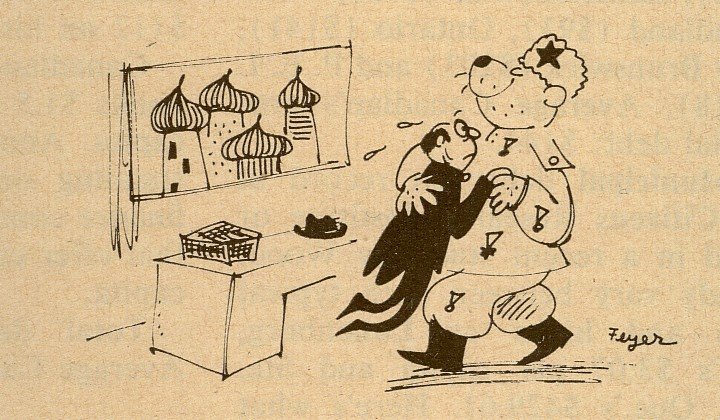
Feyer: The Comic Art of George Feyer

I thought it would be a good time to remind folks that there are still some copies left of the little George Feyer book I put together for Feyer's induction into the Canadian Cartoonists Hall of Fame a few years back. The book includes a small collection of cartoons from Feyer's magazine work as well as some book illos and gags. It's available for $6 (including postage):

Canadian Comic Art Centre
℅ Bryan Munn
2B Northumberland St.
Guelph, ON
Canada
N1H 3A5


Dive Into Our New Book!

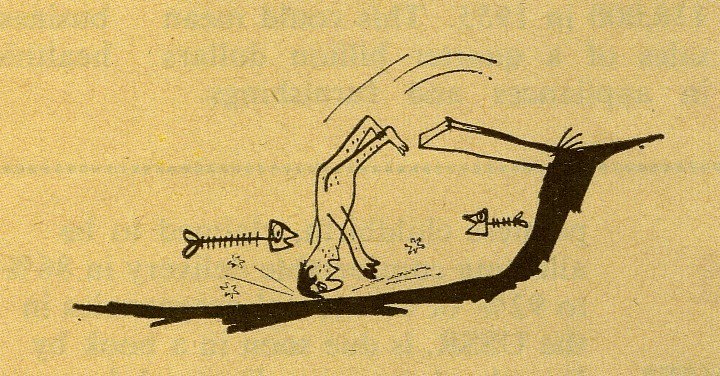
The Canadian Comic Art Centre is pleased to announce "Feyer: The Comic Art of George Feyer".


This 24-page collection of cartoons by the late George Feyer coincides with Feyer's induction into Giants of the North: The Canadian Cartoonist Hall of Fame.


Learn how George Feyer eluded the Russian Bear and went on to live a full and happy life as one of Canada's greatest cartoonists!


Wednesday, October 21, 2009

George Tuska as Superman Family artist


Cartoonist and comic book artist George Tuska died last week. The long-time Marvel Comics freelancer also had a career with DC and is responisble for a handful of Superman-related comics in the Silver Age/Bronze Age.

"Brotherly Hate!" Script by E. Nelson Bridwell, art by George Tuska (Superboy #172, Mar 1971)

"War of the Wraith-Mates!" Script by Cary Bates, pencils by George Tuska, inks by Vince Colletta. Legion of Super-Heroes story. (Superboy #183, Mar 1972)

"The Baffling Block of Metropolis" Cary Bates script; George Tuska & Murphy Anderson, art. (Action Comics #409, Feb. 1972)

"The Reality War!" Gerry Conway, writer; Tuska/Colletta. (World's Finest Comics #250, Apr/May 1978)

"Superman's Time-Killing Trip!" Gerry Conway/Tuska/Colletta (Action Comics #486, Aug. 1978)

...and many more...

Tuska was also the main artist, with inker Vinnie Colletta, on the newspaper comic strip "The World's Greatest Superheroes Present Superman" which ran for 15 years aftet the success of the 1977 Superman movie. The strip was written by Paul Kupperberg, among others.

Sunday, August 09, 2009

Top 10 Penis Names Based on Marvel Superheroes


All superheroes are phalluses, only some are more phallic than others. Some penises have names. Some don't. Regardless, it just so happens that many superhero names also make perfect penis names. Some names work differently than others (Invisible Girl, Puny Banner), others work eerily well. What follows is a scientific survey.

The Top Ten

10. Iron Man (alternate: Shellhead)
9. Vision
8. The Thing
7. The Human Torch
6. Mr. Fantastic (alternate: Stretcho)
5. General Thunderbolt Ross
4. Doc Samson
3. Mjolnir
2. Cyclops (alternate: Scott Summers)
1. Jarvis

avengers 201 cover jarvis penis polish hammer

This is just such a great cover, with the penis-like Jarvis brandishing a vacuum cleaner, Thor polishing his hammer, the red-faced and rock-hard Vision rears up above all, and The Beast crouching at crotch level with a knowing look in his eye: the cover fairly screams, "This comic is about penises!"

(Spider-Man villains also make great penis names, with The Vulture being a shoe-in for #1.)

Saturday, August 08, 2009

Chat Noir Now Open


Update: Yes, my project for the last few months has been the opening of a new store in downtown Guelph. I am proud to say all the hard work has paid off and Chat Noir is now open. Located at 32A Wilson St, in Guelph, just around the corner from Meow!, Chat Noir is a vintage decor and antiques -slash- furniture and giftware store. Kara and I are very proud and quite enthused about the new endeavor. Perhaps the best thing, from a comics perspective, is that, as with Meow!, internationally-renowned cartoonist Seth designed our logo and sign. Thanks Seth!

Thanks to everyone for being patient. Hopefully, regular blogging will soon resume.

Thursday, July 09, 2009

More on the Supergirl Underwear Controversy That is Shaking the Nation


This may finally establish who wears the pants in the Superman family.


Let There Be Bike Shorts: A Profile In Comics-Geek Courage

by Glen Weldon

Last week, we learned about a man possessed of a bold and praiseworthy vision. With a single editorial edict, this brave iconoclast dispensed with venerated tradition and blazed a new path, knowing only too well that his decision might unleash a frothing nerdstorm of outrage.

The man in question: DC Comics editor Matt Idelson. The pronouncement he issued was just eight words long, but such is its paradigm-shattering power that it will surely stand one day in the annals of comic book history, alongside "With great power comes great responsibility," "Truth, Justice and the American Way," and "Shazam!"

Thus spake Idelson:

"I never want to see Supergirl's panties again."

Saturday, June 20, 2009

Most Expensive Comic Book Ever, Part III


Following hot on the heels of Taschen's massive Crumb Sex book, comes news (via Tom Spurgeon) of a signed, limited edition of Crumb's new Genesis book, available from his publisher WW Norton. The special edition retails for $390 Canadian. Even if the suggested retail price is $625, the book is still no match for the reigning champ, the $1000 slipcased Gary Panter book I wrote about earlier.

I read a preview of Crumb's Genesis in the New Yorker last week. His retelling of the Garden of Eden story was about what I expected: a gorgeous, meticulously-rendered and masterful word-for-word adaptation of the Bible story. The story has the standard Crumb sexiness (how could it not?) but doesn't seem to have that extra touch of depth that a less-literal version might have. Chester Brown's Gospel adaptations are a case in point. They are weird and off-model enough that they actually make you think about the intellectual content of the time-worn source material. Likewise, Basil Wolverton's illustrated Bible is so weird and passionate that it approaches from a distance a sort of Blakeian artistry. Of course, Genesis is a fucking weird, schizophrenic book to begin with, and Crumb's crystal translation only makes this more obvious. Crumb doesn't have to add anything. Plus, his Eve is hot.

The book comes out in October.

Sunday, May 10, 2009

2009 Wright Award Winners


Winners of 5th annual Doug Wright Awards announced in Toronto ceremony


Toronto, ON, May 10, 2009 — The Doug Wright Awards are proud to announce their 2009 winners, which were handed out in a ceremony at the Art Gallery of Ontario last night:

Best Book: Skim, by Jillian & Mariko Tamaki (Published by Groundwood Books)

Best Emerging Talent: Kate Beaton (History Comics, katebeaton.com)

The Pigskin Peters Award: Ojingogo, Matthew Forsythe (Published by Drawn & Quarterly)

The annual Doug Wright Awards (DWAs) represent the best and brightest English-language comics and graphic novels, and are decided on by a five-member jury. The 2009 DWA jurists included Bob Rae, Andrew Coyne, Martin Levin, Joe Ollmann, and Diana Tamblyn.

This year's jury praised Best-Book winner Skim as "ravishingly beautiful," adding that:

"A jury far from being made up of teenage girls was won over by the elegance, sweep and detail of the art and by the unsentimental, often funny telling of this contemporary tale of young people trying to figure out who they are in a world that's often too exciting and too complex. Illustrations and story merge seamlessly as the mood and intensity of the black-and-white art vary according to the mood and intensity of the story. Unique and unforgettable."

Of Kate Beaton's work, the jury said:

"Beaton's superficially simple drawings can mask a considerable sophistication of line and expression. She also offers a very winning blend of historical literacy and range, from Diogenes to Diefenbaker, from Robin Hood to Riel; and all this in concert with a youthful insouciance, a skillful application of comic-book tropes such as superheroes to historical events and characters, and often laugh-out-loud funny dialogue.

For instance, her sketch of the Danish philosopher Kierkegaard has him obsessing over his characterization in the press as a hunchback. Or her heritage minute rewrite of Pierre Trudeau has him arguing with Margaret, who's wearing a dress with decollete a la Julie Couillard, about turning Canada from 'Boresville to Party Country.' Her work is assured, impressive, hilarious."


The DWA nominating committee, which chooses the annual Pigskin Peters Award, said of Ojingogo:

"With his lushly imagined book, Montrealer Matt Forsythe joins a distinguished tradition, that includes Winsor McCay and Art Spiegelman, of cartoonists exploring dream imagery. Like Oz or Wonderland, and equally populated with strange creatures and bizarre happenings, Forsythe's impressive debut puts forth a wonderfully imagined universe, rich with oddity and wonder. Forsythe excels in the difficult art of world-creation – creating here and imaginary landscape that is both dense with life and as unsettling as a dream."

The awards were handed out at the Art Gallery of Ontario on Saturday May 9, 2009, at a gala ceremony hosted by filmmaker Don McKellar.

The event also featured a moving tribute to cartoonist Jimmy Frise, who was posthumously inducted into the Giants of the North, the Canadian Cartoonist Hall of Fame, in a talk delivered by CBC Radio's Stuart McLean.

In addition, this year's event also served as the official launch of The Collected Doug Wright: Canada's Master Cartoonist, the first of two lavish books published by Drawn and Quarterly that will re-introduce Canadians to one of their country's greatest cartooning talents.

Founded in 2004 to recognize the best Canadian comics published in English, The Doug Wright Awards have grown to become one of Canada's most-anticipated comics events.

Friday, May 08, 2009

Saturday: The Doug Wright Awards!!!!!


Finally, after a long nomination process, jury selection, and tons of planning, the 2009 Wright Awards are here. They will be held at Jackman Hall at the AGO in Toronto, Saturday, May 9. 7pm to 9pm. Free Admission! Don McKellar is hosting and there will be lots of new stuff this year.

An all-star jury this year, including Joe Ollman and Diana Tamblyn (and some famous people who aren't cartoonists).

The nominees are stellar, too:

Best Book

Burma Chronicles Guy Delisle (Drawn & Quarterly)
Drop-in Dave Lapp (Conundrum Press)
Paul Goes Fishing Michel Rabagliati (Drawn & Quarterly)
Skim Jillian & Mariko Tamaki (Groundwood Books)

Best Emerging Talent

Kate Beaton (History Comics)
Caitlin Black (Maids of the Mist)
Jesse Jacobs (Blue Winter, Shapes in the Snow)
Jason Kieffer (Kieffer #2)
Nick Maandag (Jack & Mandy)

The Pigskin Peters Award

Hall of Best Knowledge Ray Fenwick (Fantagraphics)
Ojingogo Matthew Forsythe (Drawn & Quarterly)
All We Ever Do is Talk About Wood Tom Horacek (Drawn & Quarterly)
Small Victories Jesse Jacobs (self-published)

Wednesday, May 06, 2009

Google Street Car Spotted

I saw the Google Car at the corner of Wellington St. and Gordon St. in Guelph at 3:07 PM today. The car was going east along Wellington. I fished my camera out of my bag but was too late to get a shot and thought that it would be too ridiculous to chase it through traffic. But not too ridiculous to blog about!


No it wasn't being ticketed like this one. And it was a dark blue-grey colour.

Sequential Magazine

sequential pulp issue one 1 2009 tcaf

Sequential: the magazine!

I'm very pleased to report that the first issue of the print version of Sequential will be available for free at the Toronto Comics Art Festival this weekend.

Sequential is the daily newsblog about Canadian comics that I contribute to. It has been online since 2002 but for TCAF this year we decided to create a print edition that captures in physical, 3-dimensional form the essence of what we do on a daily basis with the blog. To this end, we enlisted the aid of several cartoonists and writers whose stories and art we have covered and linked to over the years, and the result is a 22-page magazine full of comics, reviews, interviews, and features about every aspect of comics and graphic novels in Canada.

The mag features a cover and a graphic-novel preview by Sequential editor/publisher Max Douglas (aka Salgood Sam), who also worked tirelessly recruiting and riding herd on talent, fielding story-pitches, selling advertising, dealing with the printer, writing, and laying the whole issue out solo. There are also articles by Robin Fisher, Jamie Coville, Jim Munroe, Brad Mackay, Robert Pincombe, and yours truly. As well, there are comics by John Martz, Fiona Smythe, Sean Ward, Dan Zabbal, Willow Dawson, and Mahendra Singh. We cover old strips, new strips, webcomics, bande-dessinee, and everything in-between. And I have to say, the thing looks pretty damn sharp.

Canadian comics is a dynamic culture of wonderful art, artists, writers, readers and publishers (not to mention all the various craftspeople, printers, cosplayers, retailers, and whatever-the-hell Herve St.-Louis is), and we like to think this new incarnation of Sequential captures just a little bit of that magic.

The magazine will be distributed for no charge at TCAF and hopefully will serve as something of a guide to some of the people and events of the weekend. Please drop by and check out the issue and maybe say hi to some of the contributors. I hope to see you there!

Thursday, April 23, 2009

Sunday, April 05, 2009

Medium/Genre, Genre/Medium

So, is science fiction a medium or a genre? From a Telegraph article by the confusing Tim Martin:

"Like science fiction, this is a medium with its roots in pulp and the alternative: for every scholar who attempts to trace the history of sequential art back to pre-Columbian parchment or the Bayeux Tapestry, there will be 50 diehards who claim it all started with Superman."

and

"The central misconception around comics is the idea that they're a genre, not a medium. "

Thursday, March 19, 2009

Pigskin Pete

The Wright Awards nominees were just announced. This year Jimmy Frise, creator of Birdseye Center and Pigskin Peters is being posthumously induced into the Giants of the North Hall of Fame. I don't exactly know what this video has to do with that. (thanks to Sean Craig)

Monday, March 16, 2009

Hype: Complete Peanuts, 1971-72

peanuts 1971
by BK Munn It's easy to forget that these books are coming out on a regular basis. The temptation is to take them for granted now that the initial interest over the first volumes has largely subsided. Now that two whole decades of Peanuts have been reprinted in the deluxe hardcover format published by Fantagraphics and designed by Seth, we can really get a sense of what a huge achievement this project is and will continue to be for a generation.

The latest volume is number 11 in the series. It features major appearances by Marcie, Rerun, and the ultra-obscure sportsman, juvenile delinquent and class warrior Thibault (featured on the spine). Here is the press release:

Peanuts surges into the 1970s with Schulz at the peak of his powers and influence: a few jokes about Bob Dylan, Women's Liberation and "Everything You Always Wanted to Know About Sex" (!) aside, these two years are as timeless as Peanuts ever was.

Sally Brown -- school phobia, malapropisms, unrequited love for Linus and all — elbows her way to center stage, at least among the humans, and is thus the logical choice for cover girl... and in her honor, the introduction is provided by none other than Broadway, television and film star Kristin (Wicked) Chenoweth, who first rose to Tony-winning fame with her scene-stealing performance as Sally in You're a Good Man, Charlie Brown.

Two long Summer-camp sequences involve Charlie Brown and Peppermint Patty, who has decided that Charlie Brown is madly in love with her, much to his clueless confusion. Snoopy shows up at camp as well, as does Peppermint Patty's new permanent sidekick, the one and only Marcie.

The eternally mutable Snoopy mostly shakes off his World War I Flying Ace identity and turns into Joe Cool, college hipster extraordinaire. And in three long sequences he writes a fan letter to his favorite author, Miss Helen Sweetstory, then goes on a journey to meet her, and finally enlists Charlie Brown's help when her latest opus, "The Six Bunny-Wunnies Freak Out," falls afoul of censors.

Also, Woodstock attends worm school, falls in love with a worm (perhaps the most doomed unrequited Peanuts love story ever!), and is nearly eaten by the neighbors' cat... Peppermint Patty is put on trial for another dress code violation and makes a very ill-advised choice in terms of lawyers... Snoopy turns Linus's blanket into not one but two sportcoats... Lucy hits a home run... and the birth of one Rerun Van Pelt!

Tuesday, March 10, 2009

Sex Guardian


Canadian superhero action figure discusses sex on a talk show, or something.

Monday, March 09, 2009

Craptain Canuck vs Watchmen, Part 2


3 Superhero Comics That Were Better Than the Watchmen Movie

It should come as no surprise that I felt the best part of the recent Watchmen movie was the ending. Specifically, the choice of music played over the closing credits: Leonard Cohen's "First We Take Manhattan." No other song could be so fitting. An ironic, apocalyptic song-poem droned by Cohen over a cheezy, 1980s synth-pop track, the piece perfectly sums up the contradictory impulses at work in the horrible film that preceded it. Serving as a nod both to the conspiratorial nature of the film's plot and to the centrality of the ubermensch Dr. Manhattan character, the song's opening lines, "They sentenced me to twenty years of boredom...," perfectly sum up my feelings after sitting through the seemingly interminable movie.

The best part of the recent Watchmen hoopla and hype is that it has re-opened the critical debate on the comic book source material of the movie. Stalwart soldiers for the cause of comic art, like Jeet Heer, take a stance against all superhero comics that are not straight parodies or fun kids' stuff. Others, like cartoonist-critic Frank Santoro, say you have to be a true-believer to even begin to understand where Alan Moore is coming from. Somewhere in the vast middle is Tom Spurgeon who, while he pans the film, still finds several interesting approaches to enjoying the graphic novel.

There is no denying the graphic novel is interesting, a workmanlike, well-crafted, intricately plotted story packed-full of stimulating and often funny ideas about superheroes and politics, but it is essentially a failed masterpiece the parts of which never really cohere in any significant way. A great gaudy graphically complex book, Watchmen nevertheless suffers from Dave Gibbons stiff figure drawing and Moore's shallow characterizations, unbelievable plot, and ambiguous relationship to the material.

In truth, it is extremely hard to take superhero adventures seriously, let alone craft aesthetically sophisticated versions of them for adults. The most successful contemporary examples of mass-market superhero comics seem to straddle a fine line between slick genre exercises that meld aspects of crime fiction to superhero fantasy and utter fannish dreck that would have been rejected by producers of 1970s Saturday morning cartoons. There is only so much metaphor and thematic density a rickety genre about magic boyscouts in circus costumes can support.

For your consideration, another group of superhero-related comics that attempt to do something with the genre, inspired by Sean Rogers' recent Watchmen "Corrective":


1. Trashman by Spain Rodriguez

(collected in Trashman Lives! by Fantagraphics Books)

Originally appearing in 1960s underground press forums like the East Village Other and in Spain's own Subvert comic book series, Trashman answers the question nobody asked, "What if Jack Kirby's Sgt. Fury was a horny Marxist from the future?" Spain re-imagines the traditional superhero story from the point of view of a working-class leftist militant confronted with creeping political fascism and corporate capitalism, confronting it with paranoid drug-influenced page layouts and plotting, clunky post-Kirby figure drawing, heavy black inks, and trippy sloganeering and self-referentiality, all set in a fantasy of revolutionary sex and violence. Trashman is really a prole named Harry Barnes who is recruited and trained by the Sixth International to fight the cops and defend the workers. Trashman has several paranormal senses and the ability to change his shape at will, but he mostly likes to shoot people with machine guns in the service of a disjointed narrative --sort of OMAC meets Che Guevera. The Trashman comics are beautiful and funny love letters to a revolutionary ideal.


2. Archie as Pureheart

by various

(available in 2010 as Archie: Pureheart the Powerful from IDW)

As explained here, the Archie team decided to simultaneously cash in and parody the craze in superhero comics spurred by the 1960s Stan Lee/Jack Kirby/Steve Ditko revolution at Marvel and the revitalization of Silver Age superhero products at DC by penning a series of adventures starring the Riverdale gang as a group of superheroes, with lots of tongue-in-cheek fun and beautiful fluid clean cartooning. It's a self-aware kids comics that's not afraid to take a numbskull premise and run with it, without looking back, and without making a career of it. The result reads like a combination of classic MAD superhero parodies ("Superduperman," et al), Ditko and Lee's Spider-Man, and Otto Binder and CC Beck's Captain Marvel/Shazam comics of the 40s and 50s. The sort of superhero comics that Jaime Hernandez would do, minus the sex and punk rock (but still with lots of fishnet stockings and people hitting each other with their butts).


3. Jimmy Corrigan, Smartest Kid on Earth, by Chris Ware (Fantagraphics)

Ware's searing masterpiece puts Watchmen to shame with its ironic distance, convolutions and diagrammatic precision. A reflection on mortality, failure, family, childhood, and an obsession with superheroes, Jimmy Corrigan is a graphic novel that treats the godlike nature of our heroes with a probing wit and academic artistic scalpel. The fact that both almighty god and a washed-up Steve Reeves-style actor appear as a Superman figure is just a bonus. Did any comic do more for and to the genre of superheroes than Jimmy Corrigan? As Peter Schjeldahl wrote for The New Yorker, "Reading 'Jimmy Corrigan' is like operating an intricate machine whose function is not immediately apparent. Gradually, meanings emerge and emotions crystallize. None gladden." The doom that comes to Jimmy is ultimately more banal and overpoweringly wonderful than the boredom of Dr. Manhattan's demise and resurrection.

Wednesday, February 25, 2009

Graphic Novel Review: Tamara Drewe


Part 1 of The Best of 2008
(see the full list here)

Tamara Drewe
by Posy Simmonds
(Jonathan Cape/Random House)

review by BK Munn


Posy Simmonds draws the best cows of any living cartoonist and her ability is ably demonstrated in this pastoral farce that reads like Leah McClaren as drawn by Frank Thorne (or maybe David Lodge meets Colleen Doran?) --and is in reality an homage to Thomas Hardy's Far From the Madding Crowd (which was originally illustrated by another woman, Helen Paterson, way back in the 1800s). The book has a wonderful polyvocal narrative centred around the goings-on at a writers' retreat in the English countryside. The titular heroine, a zaftig columnist-turned-novelist, is the catalyst for a series of romantic and literary calamities that befall a small group of creative types forced into close quarters in the wide-open spaces. For a comic, Tamara Drewe has relatively large chunks of text, and the book feels very writer-ly, as befits its source, subject matter, episodic plot, and original serial publication, but it actually has a very tight structure built on a foundation of humour, beauty, and skilled storytelling.

Thursday, February 19, 2009

Batwoman loves Catman


I love this cover. Sort of a Freudian dream image combining a child-like approach to lust and femininity with bold iconography. You can see why artists like Dan Clowes have made so much of Silver Age DC comics tropes. Background: Catman was a Batman villain who had a major crush on Batwoman (Kathy Kane) and fantasized about her wearing kinky costumes. Sort of a superhero (or supervillain) stalker. But he had a cool pad and liked cats, so he couldn't be all wrong. The Catman "epic" played out over a scattered trilogy of issues during the mid-60s.

Monday, February 16, 2009

Captain Canuck vs The Nihilists of Sarnia


This classic comic book adventure presents the superhero dilemma in a new light. Canada's favourite son, Capt. Canuck, superhero with a cause, fights U.S. imperialism as only he can, through meditation.

Tuesday, February 10, 2009

Who Cares If A Comic Book Doesn't Solve a Problem?

I wonder with some of these vendors, these artists, these companies--are they really asking themselves ‘what problem does this solve?’ --Nina Stone

Maybe I just didn't understand the argument, but I'm not sure if I get the point of Nina Stone's post about the New York Comicon. Stone writes with great empathy about the plight of the lonely vendors with empty booths at the convention, dredging up her own memories of being a gifted elementary school near-crybaby and comparing her experience of being thrust into the adult world of problem-solving without the tools or even the desire to figure out solutions in a logical, "adult" way, to the experience of entrepreneurs, publishers and artists who have created products for which there appears to be little or no market. Stone blames the "insular" and "self-serving" (read: childish) nature of comics fans for their inability to be "more successful."

Businesses and products (and art) flounder and fail all the time. And its not just because the creators can't see past their own navels and are stuck in a sort of anal-stage of business development, playing with themselves like monkeys in a cage and filing their own shit in sealed mylar sleeves. If the magic key to "success" was "solve the 'right' problem" (which sounds like "build a better mousetrap" to me), you would still have the same situation. There are so many other factors that go into "success" it's almost not worth talking about. Much more than "guidance," a lot of it seems to be luck and timing. Oh, and intelligence. And talent. And a million other things. And what is "success" anyway? I'm guessing, the financial renumeration enjoyed by people on the bestseller list or people with a blockbuster movie. Or "success" means having a girlfriend or the respect of strangers, maybe?

For many, comic conventions are therapy. They are a thousand other things. Comic conventions --just like hardware conventions or fashion tradeshows-- are also filled with dishonesty and ugliness. Intellectually and aesthetically. Sometimes they are also filled with great art or, at the very least, even products that satisfy a small but needy and grateful market.

Monday, February 09, 2009

Best of 2008


by BK Munn

Of the graphic novels and comics I've read from 2008, here are my favourites. I've categorized according to rough genres. I'm drawn to long-form fiction comics (graphic novels) more than most forms of comics and tend to favour them in my reading and list-making. Dash Shaw's Bottomless Bellybutton was a revelation for me, wonderful art, a mesmerizing, emotional narrative. It was also the work of a relative newcomer, as is the work I've listed in minicomics. I feel kind of silly comparing, say, Jason Kieffer's or Jesse Jacobs' short comics with Shaw's massive book but end-of-year lists seem to do that all the time. Some things are easier to rank. I actually read more new superhero comics in 2008 than in any year since 1986, including large chunks of the latest from Grant Morrison, Brian Bendis, and Ed Brubaker, and I can honestly say that the 6 pages of Gary Panter in Omega #7 and the first two chapters of Jaime Hernandez's superhero saga in the new Love and Rockets blew most of those long-underwear types out of the sky. They were also more profoundly beautiful than several of my choices in other categories.

I also refuse to rank archival re-issues of classic comic strips by past masters, some of the best comics of all time, alongside new minicomics or memoirs or prints of Japanese horror adventure comics. And speaking of translations, I decided to lump the translated Canadian comics on my list in with the other translated comics I read. So, more divisions. I thought of a separate Canadian category for all, but thought the Canuck entries stand up well in international company. It also says something for the current era of comics publishing that there is enough interesting, quite excellent and even wonderful work being published in a number of different categories.

Fiction
Tamara Drewe by Posy Simmonds
Bottomless Bellybutton by Dash Shaw
Skim by Jillian Tamaki and Mariko Tamaki
Acme Novelty Library #19 by Chris Ware
Dietch's Pictorama by Kim, Simon and Seth Dietch

Non-Fiction/Memoir/Reportage
What It Is by Lynda Barry
Drop-In by Dave Lapp
My Brain is Hanging Upside Down by David Heatley

Minicomics
Kieffer #2 by Jason Kieffer
Blue Winter, Shapes in the Snow by Jesse Jacobs
Small Victories by Jesse Jacobs

Reprints
Breakdowns by Art Spiegelman
Little Orphan Annie Vol 1 by Harold Gray
Popeye Vol 3 by EC Segar

Translations
Paul Goes Fishing by Michel Rabagliati
Burma Chronicles by Guy Delisle
Tokyo Zombie by Yusaku Hanakuma
Cat-Eyed Boy by Kazuo Umezu
Red-Colored Elegy by Seiichi Hayashi

Superhero
Love and Rockets #1 by Jaime and Gilbert Hernandez
Omega the Unknown #7 by Gary Panter, Jonathan Lethem and Farel Dalrymple

Webcomic
www.harkavagrant.com by Kate Beaton

Friday, February 06, 2009

Canadian Fan Project: Super Letters


More missives from the distant past of fandom, when Canadian comic book fans weren't shy about speaking truth to power:

"As an ardent reader of your fascinating magazines, this is my first opportunity to catch you. In 'The Unknown Superman', you show Strong Bear boring with his hands in the coarse soil and tough rocks. If his ring was not destroyed by that, why was it destroyed when Lois dropped it? And why didn't the ring become indestructible on earth just as everything from Krypton does, if Strong Bear automatically gained superpowers here?" Robert Romano, Montreal Quebec (Lois Lane #52, 1964)

"I though Jimmy Olsen No.101 was just great because it had an interesting plot and plenty of excitement. But in my opinion, it was a mistake to kill off Miri and her father, Dr, Zak-Lor. This was a pretty drastic and unnecessary move, because they were two very important characters in the story. But aside from that, the feature was out of this world!" Arpad de Szoeczy, Weston, Ont. (Jimmy Olsen #103, 1967)

"I say, guv'nor, this is Ringo Starr speaking on behalf of all us Beatles. We are quite flattered that you mentioned us in your comic. But if you're going to put us in, please do it properly. On the first page you show Mr. James Olsen watching us on the telly and your artist depicts us with lapels on our jackets, whereas we have none. We want to thank you for the publicity. You see, we are making all this money to get something we have always needed --a haircut!" Pat (Ringo) Boardman, Toronto (Jimmy Olsen 81, 1964)

"I especially like Rose and Thorn. I am looking forward to seeing much more of her. I don't really know why I like Rose, but maybe its because she has the same haircut I do!" Linda Hamilton, Winnipeg (Lois Lane #108, 1971)

"I truly enjoy your stories, and their characters. They're simply great! I don't believe in telling people of their mistakes, especially since I haven't any to speak of ...So I'm writing just to tell you that I think you're very fair in your attitudes towards your readers. You take the complaints of those who do write to complain, and you answer them constructively. As long as Lois Lane is on sale, I will continue to buy it, and remain a follower of Lois adventures!" Bonnie Erickson, Alberta (Lois Lane #137, 1974)

Tuesday, February 03, 2009

Superman Robots


Some of the most poignant melodramatic aspects of the Superman family children's comics of the 1950s and 60s involve the Superman robots. Automaton slaves created by scientific genius Superman to act as his backup beards, and kept hidden in the closet when not in use, many classic stories relate the AI-like attempts at individuality and rebellion of these sad creatures. Superman kept his robots stashed away in his parents' basement, in a cave at the North Pole, in the closet of his apartment (whole Phds await!). Supergirl kept her robot double waiting patiently in the trunk of a tree, never sleeping, in those anxiously whimsical stories drawn by Jim Mooney.

The most recent robot tale I've read concerns Robot X-3. While training a new batch of robots (Superman trains his robots instead of programming them with essential information like, "don't let anyone see you change into Clark Kent"), Superman is turned invisible by red kryptonite and X-3 has to take his place and rescue some astronauts. X-3 gets lost in space and ends up on a tiny planet where he meets a stranded mermaid woman who reminds him of Superman's first girlfriend, Lori Lemaris. X-3 is such a hero-worshipper that, when the mermaid dies, he creates a robot mermaid family and builds a little house where he lives forever and happily ever after, kind of like The Little Prince meets Space Family Robinson, as illustrated by Kurt Schaffenberger .

Thursday, January 29, 2009

My Barbarian

Bringing the "people dressed as Canadian superheroes" file up to date:

Monday, January 26, 2009

David Mirvish Books Closing

The Star
Spacing Toronto

Globe Books

It is quite the news. When I first read about it and posted it to Sequential, I thought that the closing of Mirvish was long overdue, in the context of North American booksellers, and definitely in relation to the book market as constituted by the Book Depots, BMVs, and Chapters/Amazons of the world. No way to compete, despite the deep pockets of the owner. Sure Mirvish Village is a "village," but it's not exactly Guelph, a one (or two) bookstore town. There are tons of (chain) stores within fifteen minutes of Mirvish. Not to mention that the store seemed overstaffed and closed early (chains stay open to 9 or midnight --especially in populous/cosmopolitan areas of megacities). Hell, the Bookshelf in Guelph is open most nights to 8 and our Chapters to 10. (But lets not forget that Heather Reisman set up a $3 million/year fund to Israeli army vets.) Anyway, Mirvish is going online, where they have a very slim chance, based on financial backing, acumen, and customer loyalty, to make a go of it as a boutique/gateway site for moneyed art book buyers. Overall, it was a great space, offering a great service. Books you would never stumble across anywhere if you didn't know what to ask for. Booklaunches for Shary Boyle and other artists. Support for small presses like The Porcupine's Quill. I had many great experiences there and found some great books. Silver lining: maybe the Beguiling will move out of its cramped space across the street, if the rent is reasonable.

Thursday, January 22, 2009

NFB Reveals New Site

Canada's National Film Board, or NFB for short, has been producing movies, ranging from animated shorts to documentaries to full-length features, since forever. They gave finally got around to opening a youtube-style website where you can watch all their films. There are over 700 films currently uploaded, with more added daily.

Here are some highlights:

1978 cartoon about death and the afterlife by Ishu Patel


1939 film about unemployment in the Depression


women pilots in WWII by Jane Marsh


Norman McLaren's Le Merle, 1958

Wednesday, January 21, 2009

Be Nice, Clear Your Ice!

Ben Wicks was a bestselling author, tv host, and cartoonist. But his most lasting contribution to Canadian culture, besides the Ben Wicks Pub in Cabbagetown, may be this awesome public service ad that has inspired millions of Canucks:

Monday, November 10, 2008

Top 5 Fictional Comic Books


I recently read with interest this examination of books that never existed outside of fiction on the Guardian Book Blog. In that discussion of Borges-style imaginary books like The Blind Assassin from the Margaret Atwood novel of the same name, a poster in the comments section mentioned several apocryphal novels glimpsed fleetingly in a sequence from Neil Gaiman's Sandman comic book. The post made me think about my favourite examples of "fictional" comic books and cartoon characters, as featured in some classic comics and graphic novels.

5. "The Comic Book Archer" (Adventure Comics 269) by Robert Bernstein and Lee Elias

In this 1960 story, superhero and Robin Hood imitator Green Arrow tries to help a young comic book artist get published in "All-Star Comics" by reproducing the feats of the cartoonist's creation, "Wizard Archer." This is a fun little gem from the Silver Age of U.S. comics that features a self-referential, behind-the-scenes peek at a DC-like comics company, in which caricatures of writer Robert Bernstein and cartoonist Lee Elias appear to explain how comic books are made ("The artists draw whatever the writers tell them to in their scripts!"). Of course, the upshot is that Green Arrow proves the archery tricks that appear in the comic can actually be accomplished in "real life" and so Wizard Archer appears in the next issue of All-Star, which finds a space on the shelves alongside Atlantis Comics, The Golden Avenger, and Western Heroes. (this story is reprinted in Showcase Green Arrow)


4. Watchmen by Alan Moore and Dave Gibbons (DC)

The comic-within-a-comic of this graphic novel is the famous Tales from the Black Freighter, the pirate comic and Brecht-reference that answers the question, what kind of comics would kids read in a world where superheroes are real? Text pieces in the book suggest that Tales was part of a larger pirate genre, spear-headed by EC's Piracy. The pirate story "Marooned" is used by Moore as part of the elaborate system of parallels and gothic devices that make up the bally-hooed structure of Watchmen and still reads today as an affecting piece of purple prose, regardless of the repellent stiffness of Gibbons drawings.


3. Hicksville by Dylan Horrocks (Drawn and Quarterly)

This graphic novel about an American journalist investigating the bizarre secrets of a small New Zealand town is equal parts ode to comics and metatextual exegisis of comics storytelling. It also contains more than its fair share of imaginary comics (or comics-within-comics), including Captain Tomorrow -- the creation of New Zealand ex-pat Dick Burger, an autobiographical minicomic by Burger's ex-assistant Sam Zabel, and mysterious about maps, Maori, and Captain Cook. At the heart of the book lies the mystery of the Hicksville Lighthouse, repository of all of the great comic might-have-beens, the mythical comics that the world's greatest artists and writers would have created if not constrained by commerce and the philistinism of comic book production in the 20th Century. Thus, we are treated to the exquisite idea of Harvey Kurtzman's magnum opus History of War, lying alongside lost works by Jack Kirby, Picasso, Winsor McCay, and untold hundreds of others.


2. David Boring by Daniel Clowes (Pantheon)

This graphic novel has been described by Clowes as "Fassbinder meets half-baked Nabokov on Gilligan's Island" and largely resists summarization. It deals in small part with efforts of the eponymous lead to learn more about his father, a cartoonist who worked on a superhero comic book called The Yellow Streak. The single extant issue of the comic book exists only in fragmented form, having been torn up by Boring's mother. Piecing together the few panels of the comic remaining, it appears that the Yellow Streak comic is a synthesis of Superman and Johnny Thunder, but the story is mostly unreadable, portraying a weird Freudian nightmare universe akin to the world created by Wayne Boring and other artists of the Weisinger-era Superman comics, the world of Jimmy Olsen and the Phantom Zone. Boring's efforts to make sense of these fragments, trying to find some reference to the real world history or psyche of his father form one of the major subplots of the book and relate to Clowes' recurring themes of alienation and authenticity.


1.
Wimbledon Green by Seth (D+Q)


Seth's first graphic novel, It's a Good Life If You Don't Weaken, introduced us to the fictional New Yorker cartoonist Kalo, one of the great hoaxes of modern comics. Seth wrote an introduction to Horrock's Hicksville and seems to have a soft spot for imaginary comics. Wimbledon Green is the story of an Uncle Scrooge-like comic collector who criss-crosses the country looking for the world's most rare and obscure comics, including such gems as The Green Ghost #1 (the Holy Grail of comics collectors), All Bedtime Comics and Mighty Orbit. But the cream of Wimbledon Green's collection is the classic hobo comic book, Fine and Dandy, a wonderful series that recalls 30s comic strips, Laurel and Hardy, and the work of John Stanley, a Seth touchstone and idol.