Tuesday, May 13, 2008

Most Expensive Comic Book Ever, Part II


I take it back. A while ago I wondered if this Taschen collection of Robert Crumb sex stories was the most expensive comic book ever. This week, Gary Panter launched his new book, appropriately titled Gary Panter. Published by Dan Nadel's excellent Picturebox, the book is billed as "an intimate look at the work and life of a legendary artist," this massive, wonderful-looking, 688-page retrospective collects comics and images from one of my favourite artists and a close competitor for the previously-bestowed-on-Crumb honorific, "greatest living cartoonist." He certainly is one of the nicest cartoonists ever, as I found out when he signed a book for me during his brief appearance at the Toronto Comic Art Festival a few years back.

I can't wait to see a copy of this "in the flesh". Interested parties can pick up a copy for a measly $95. Supremely interested parties can acquire a copy, along with a limited silk-screen print, signature, doodle, and hand-painted slip-case, for $1000.

Saturday, May 03, 2008

Wonder Woman Costume and Supergirl Underwear


I just noticed that the ads that appeared at the top of my last post were for Wonder Woman Costumes and Supergirl Underwear and Loungewear. I feel that, if I acheive nothing else with the Mystery Hoard blog, I will have the pleasure of knowing that readers have been offered such essential, life-enhancing products as a result of my efforts.

Thursday, May 01, 2008

Solomon Grundy and the Animated Corpse of the Working Class


The Animated Corpse of the Working Class

by BK Munn

We search in vain for examples of the working class superhero. With few exceptions, he is nowhere to be found. In his place, everywhere we find the figure of the superhero working on the side of the bosses, whether as an ideological footsoldier in the armies of the mass media (the Daily Planets and Bugles, WHIZ's and WXYZ's), as a representative of the Repressive State Apparatus (the police and armed forces), or even as the boss himself: we need not enumerate how many capitalists seem to moonlight as masked vigilantes, erstwhile Robin Hoods reduced to acting as night watchmen over the money bins of their fellow billionaires.

Ah, but who do they guard against? Who appears to play the role of Beagle Boy opposite the concerted efforts of these super-powered Scrooge McDucks? The superhero's triumphalist rhetoric of truth, justice, and the American Way must not remain unchallenged --nor can the use of force continue to be monopolized by a single comic book class. At last, a dim figure steps forward to take up its historic role of class antagonism.

Enter the supervillain, shambling leftward onto the world-historic stage. As an expression of class anxiety, he is unparalleled in art. From his secret origins as the stepchild of the mustache-twirling Oil Can Harry of melodrama and the grand-guignol grotesques of Dick Tracy, the comic book villain embodies all of the perceived threats to the capitalist utopias envisioned by the comic book creator, a world of shiny metropolises, lorded over by masonic fraternities of top-hatted magicians, fetishistic playboys, and patriarchal circus strongmen.

The supervillain disturbs this child-like Eden by introducing a note of the abject to the proceedings. The supervillain, representing the poor and working class multitude, is our window into the world of the superhero. Whether mad-scientist, gun-toting mobster, or costumed gadgeteer, the comic book villain represents "the return of the repressed" in the dream world of adolescent power fantasies. No matter how often or how ingeniously the superhero puts him down, the villainous representative of the working class schemes his way out of his prison and into a new museum heist, nuclear extortion, or revenge plot. The chief lesson of the superhero narrative is that no plot device or deus ex machina can ultimately contain the immense power of the working class, especially when organized or constituted as a corporate mass entity.

The appeal of their forceful presence is almost magnetic. What youthful reader has not experienced a comradely thrill when encountering for the first time such deliciously named amalgamations as The Monster Society of Evil, The Legion of Doom, or The Secret Society of Supervillains? These unions and guilds of the downtrodden lumpen proletariat of the comics form an essential counterpoint to the legalistic Chamber of Commerce-like aura that adheres to the clubby superhero organizations (The Justice League of America, The Avengers, et al).

Nowhere is this more evident than in this charming little epic from 1947's All-Star Comics #33. The two post-War years of 1946 and 1947 were memorable as a time of intense class conflict, as the wartime economic boom combined with an increasingly militant U.S. working class made up of returning soldiers and a Depression-hardened nation. Some of these issues are bound to find their way into the prole art form of comics.

"The Revenge of Solomon Grundy" features the return of the nursery-rhyme-inspired supervillain Solomon Grundy, after a long absence. Last seen imprisoned by Green Lantern in a magical green ball, Grundy personifies the bottled-up desire of working class ambition, on hold during the "no-strike" years of World War II and still frustrated by the years of the Great Depression of the 1930s. At the same time, he represents the refusal of the disciplinary regime of the social factory system --a sort of unliving mass strike.

Grundy's attributes are those of the dreaded poor or proletariat unleashed. From his humble origins as a small-time criminal who meets his ignoble end drowned in a swamp, to his reincarnation as a monstrous, barely articulate agent of vengeance, Grundy is a proto-Hulk, equal parts lovable hillbilly and Luddite loom-smasher. Clad in tattered working-man's clothes, including giant hobnail-style brown boots, the zombie-like Grundy stands in stark sartorial contrast to the dandified glamour of the superheroes, with their capes, primary colours, and bold trademarked insignia. He is the Other to the rich and powerful superhero, a dialectic whose hallmark is violence and confrontation.

The plot of the story is delightfully simple. Freed from his magical prison by a stray bolt of lightning, Solomon Grundy rampages through the countryside and a series of small towns in search of his arch-enemy, the superhero Green Lantern. Alerted by a radio report, the members of the Justice Society disrupt their monthly meeting and split up to search for the so-called "inhuman menace to mankind." Encountering Grundy separately, the members of the Society suffer defeat after defeat, but manage to each solve a number of local dilemmas brought to light by the appearance of the ghostly apparition of Grundy. Thus, the sound thrashing administered to The Flash is the occasion for a local police chief to redeem himself. Likewise, Dr. Midnight's narrow escape from death at the hands of Grundy results in his foiling a pair of safe-crackers.

The locus of the action is largely industrial, with all of the settings having heavy ideological overtones. For instance, the heroes battle Grundy in two factories: Diminutive college student-turned costumed pugilist The Atom engages his opposite inside a shoe factory, where versions of Grundy's giant boots are arranged in rows and the giant seizes the means of production, as it were, to deliver a major beating. In a similar manner, Johnny Thunder encounters a copy-cat version of Grundy at a cereal factory. The other heroes attempt to prevent Grundy's riotous war on private property in the form of a town square, a rich family's mansion, and a newspaper office, with mixed results.

The solution is total banishment: the lesson of the comics is that Grundy, aka the working class, cannot be stopped by bullets or brawn. It remains for Green Lantern to encase him in another bubble and transport him to the moon, in something of an anti-climax.

It is easy, given stories like this, to imagine Solomon Grundy as a mass or corporate figure, his part-human, part-swamp composition a dual metaphor for both the imagined threat posed by an aroused working class --a working class that can only be constrained by a concerted effort on the part of capital, utilizing all of capital's weapons-- and a repressed proletarian subjectivity, reveling in freedom and destruction. In this respect, even the efforts of a penny-a-word pulp writer like Gardner Fox and a team of teenage artists employed in sweatshop-style production, labouring over adventure stories for children, have a part to play in the ideology and iconography of class struggle.

Thursday, April 24, 2008

Unsung Geniuses: Florence Thomas of ViewMaster

Florence Thomas viewmaster reels

by BK Munn

Most fans of the tiny fantasy worlds glimpsed through the lens of a View-Master viewer are probably unaware of the name Florence Thomas. Thomas was the Portland, Oregon sculptor employed by the makers of the 3-D viewer to create miniature dioramas of fairy tales and pop culture scenes which she then photographed for reproduction into the iconic circular white reels that have delighted children and adult collectors for decades.

Thomas produced her first reels for View-Master in 1946 --a series of Fairy Tales and Mother Goose rhymes that are still in circulation. According to one source, Thomas "developed special methods of close-up stereo photography and modeling which is now in common use by major motion picture studios" (John Waldsmith, Stereo Views, 1991). She created scenes of such detail and attractiveness that you feel you could step inside and look around a corner at a complete world. Besides the Fairy Tales, these worlds included versions of the Frankenstein and Dracula stories, scenes from the comic strip Peanuts, and 3-D versions of animated cartoons like The Flintstones. Amazingly, all of the puppet-like figures were sculpted from clay and the scenes were shot using a single-lens camera (not a stereo camera) that was moved on a track to get the stereo shot. Sometimes the models were moved slightly between shots to enhance the 3-D effect. During her heyday, Thomas appeared on television and radio to satisfy the curiosity of the children who consumed View-Masters by the millions in the 1950s and 60s. Today, she is largely forgotten except for a few collectors. You can see her at work (in 3-D, of course!) on this collector's reel. A tv appearance is available on this dvd.

Thomas trained a successor, Joe Liptak, seen below shooting a scene from the Disney Robin Hood set. The work of these two geniuses, lovingly crafted three-dimensional stories, live on in the creations of artists like Vladimir, recently profiled in The Believer magazine.
joe liptak viewmaster view-master

Monday, April 07, 2008

Andy Warhol is ... Robin the Boy Wonder!


From a Batmania-era issue of Esquire magazine, a photo layout of Andy Warhol dressed as Robin and Nico dressed as Batman. Lester Bangs said that Nico was sort of a racist dunce, but she is such an intense vision and one of my favourite singers ever.

(via Jeff Trexler)

Tuesday, April 01, 2008

Jim Mooney, Classic Supergirl Artist


Jim Mooney, 1919-2008


by BK Munn

Wow, less than a week after the amazing news that the Siegel estate has regained the Superman copyright comes the sad news that cartoonist Jim Mooney, one of the last remaining artists of the classic Superman Family stories, has died. Mooney died on Sunday, March 30, according to this obit by Mark Evanier.

Mooney was best known for his long association with Supergirl --he illustrated her adventures from roughly 1959 to 1969. Along the way, he was also responsible for delineating many of the most fondly-remembered adventures of the Legion of Superheroes. In the 1970s, Mooney moved to Marvel and worked on Spider-Man, Ms. Marvel, and, most famously, Steve Gerber's Man-Thing and Omega the Unknown.

Mooney's Supergirl art developed into a perfect match for the character, with soft lines and many feminine details --like the trademark long eyelashes and frilled skirt he added to the character. At DC, Mooney usually inked his own pencils, controlling every aspect of the finished art. (In contrast, Mooney would usually work either as a penciller or inker when at Marvel, finishing pencils by Romita or John Buscema and being inked by Frank Giacoia).


Before he landed the Supergirl gig, Mooney had drawn humour, girl and funny animal comics, eventually moving on to adventure comics including ghosting Dick Sprang on Batman and illustrating Tommy Tomorrow and Dial H for Hero. His style on Supergirl is in strong contrast to the other Superman artists of the period. These artists (Curt Swan, Al Plastino) preferred muscular, dynamic figures and slick inking. Even Mooney's closest parallel, Lois Lane artist Kurt Schaffenberger, had a slick style with more in common with strip cartoonists like Alex Raymond and Mandrake the Magician's Phil Davis. Mooney's female figures are delicate and his teenagers look like teenagers, not smaller versions of adults. He also had an eye for the humourous, and was responsible for some great goofy aliens and one of the most memorable aspects of the Supergirl strip, Streaky the Super-Cat. According to an 2005 Daniel Best interview printed in TwoMorrows' Krypton Companion, "Streaky the Super-Cat was my design. I think the writer came up with initial idea, but I designed him so he looked a bit more like an animated cat. I fell in love with Streaky from the very beginning. I still draw him. I love cats. But instead of the editor telling me, 'Make him look like this.' or 'Look like that,' I pretty much drew him my own way."

Mooney's cartoon realism blend was the perfect fit for the Supergirl series. While not of the order of Ogden Whitney's bizarre, frozen art style, Mooney compositions and figures often had an underwhelming, pedestrian edge, in keeping with the sometimes low-key adventures of Supergirl. The off-putting, melodramatic premise of the series, that the orphan Supergirl is kept as a secret weapon by Superman, forced to live in an orphanage until she masters her superpowers and can be revealed to the world, resulted in many stories that merely retread ground already covered by Superman and the Smallville-bound Superboy. Thus, like Superman, Supergirl is tested by the Legion of Superheroes and has a mer- love interest. She wears a wig and uses a loyal robot double, stored in a hollow tree until needed (surely, one of the saddest aspects of any comic book ever!). Many of Supergirl's Midvale adventures revolve around the world of highschool and high-school romance. Mindful of the intended female audience for the character, the writers along with editor Mort Weisinger, found many opportunities to threaten Supergirl with marriage to strange aliens or have her develop crushes on cowboys who are really magic flying horses transformed from ancient Greek centaurs.

Conversely, Mooney was responsible for some interesting science fiction imagery and was adept at fanciful costume design --he drew hundreds of costumes for both the Legion of Superheroes feature and the Dial H for Hero back-up. Mooney is responsible for the look of many popular Legion characters including Chameleon Boy, Invisible Kid, Colossal Boy, Triplicate Girl, Phantom Girl, Brainiac 5, Shrinking Violet, Sun Boy, and Bouncing Boy.

Mooney's characters were capable of expressing a broad range of emotion. While the plots of many Supergirl stories often resembled those of romance comics, the fear, sadness and love that the characters expressed facially and the approach to body language, ranging from delicate hand gestures to slapstick double-takes, were unique to comics. On an average page, Supergirl/Linda Lee was likely to move from wide-eyed excitement to creased-brow worry to blissful dreaming to eager determination.

These are some of my favourite children's comics, a beautiful body of work created by Jim Mooney, a skilled, professional artist, who worked in tandem with great writers like Otto Binder and Superman's co-creator, Jerry Siegel.


-----
A gallery of Supergirl commissions by Mooney.

500 pages of Jim Mooney's Supergirl for $15.

The origin of Streaky.

A gallery of Mooney covers.

Superman robots

Super-Mom

Monday, March 31, 2008

Is This the Most Expensive Comic Book Ever?


Robert Crumb's Sex Obsessions
Taschen Books
258 pages
$700

I saw this beautiful book at the Beguiling last week and can't stop thinking about it. Compiling 14 of Crumb's best sex-obsessed stories published between 1980 and 2006, hand-colored by Pete Poplaski, this book may not only be the most expensive, but also, quite simply, the best comic book ever. Crumb is our greatest living cartoonist, and this represents some of his greatest mature work.

It also made me wonder, is Taschen the best comic book publisher ever?


Full details here.

Monday, March 24, 2008

Graphic Novel Review: Skim


Skim
words by Mariko Tamaki
drawings by Jillian Tamaki
Groundwood Books/House of Anansi Press
143 pages
$18.95

review by BK Munn

This gorgeous new graphic novel answers the question, what if 80s sitcom The Facts of Life was really a drama about Wiccan ceremonies, lesbian crushes, casual racism, and suicide?

Sixteen-year-old diarist Kimberley Keiko Cameron (aka Skim) is already having a hard time negotiating the preppy world of her Catholic all-girls school when she is plunged headfirst into adulthood. For Skim, "being sixteen is officially the worst thing I've ever been." Like every teenager, alternately bored, embarrassed, and confused, Skim tries several strategies to forge a unique identity for herself, with little success. Even the goth subculture Skim imagines as a refuge from the lameness of her middle class surroundings turns out to be one big letdown. In one of Skim's funniest sequences, the cult of adult Wiccans Skim and her best friend Lisa join turns out to be little more than an AA support group for hooking up burned-out ex-druggies.


The suicide of a cheerleader's boyfriend sets the plot of the book in motion and brings into focus the cracks behind the facade of highschool innocence, friendship, and Skim's own ironic distance from her own emerging womanhood and adult awareness. As her school becomes obsessed with death and suicide, Skim argues with and eventually drifts away from her best friend, moving towards new relationships and her first romance (with hippie English teacher Ms. Archer).

Skim is a delicious balancing act between words and pictures, with Skim's studiously deadpan narration contrasted and enlivened by Jillian Tamaki's fluid drawing style. Luxurious panels, alternately spartan and highly detailed, depending on the story's mood and dramatic necessity, take us step-by-step through every moment of Skim's experience. There are almost no false notes in this book, graphically or textually, a difficult performance in any work that strives to capture the nuances of teenage interiority and speech patterns.


One of the book's major themes is the series of disappointments with the adult world that adolescence is fraught with. Skim progresses through disillusionment after disillusionment, but is luckily girded with the twin weapons of sarcasm and a practiced ability to fade into the background. But these tools are almost not enough to guarantee her survival when she is forced to experience firsthand the heartache she has previously only been a sardonic observer to. In the course of the book, Skim is drawn inexorably into adulthood through a gamut of betrayals and epiphanies, all of which she faithfully chronicles for us.

The conceit of the book is that the visual aspect represents a drawn diary --the unconscious working in tandem to give a (literally) well-rounded picture of Skim's experience. Textually, this takes the form of crossed-out confessions, list-making, and subtle, funny observations expressed as Zen equations ("me=seriously screwed"; "my school=goldfish tank of stupid"). Graphically, the pictures often take the story beyond the diaristic, a perfect use of the comics form, showing what Skim can't bring herself to confess verbally through the use of body language and tiny facial expressions; skilled use of black and white, chiaroscuro effects, gray washes, and easy, virtuoso line-work. Certain key scenes are entirely wordless and Jillian Tamaki's visual storytelling skills are utilized to the maximum with almost surreal effect.

An early version of Skim was published by Kiss Machine in 2005 and writer Mariko Tamaki reworked the story as a play before the graphic novel version took its current shape. The minimalist prose, humour, and tight structure of the book seems to be a result of this process, filtered through the eye of Jillian Tamaki. The whole effect is a darkly funny, bittersweet coming of age story.


--------

Skim Booklaunch
This Is Not A Reading Series
Wednesday, March 26th. 7:30-12pm
The Gladstone Hotel, Toronto
Free
Mariko and Jillian Tamaki will be interviewed by Toronto writer Jessica Westhead, with Brad Mackay introducing.

Skim news at Jillian Tamaki's blog.

Saturday, March 15, 2008

International Shakespeare in the Comics Day


March 15 is International Shakespeare in the Comics Day!

Top 5 Shakespearean Comics:


1. The Mighty Thor by Stan Lee and Jack Kirby

Stan introduced a pseudo-Elizabethan language to this superhero series about Norse gods, lending the dialogue an epic, Shakespearian quality. As well, Kirby's creation of Volstagg, equal parts Falstaff and Porthos of the 3 Musketeers, introduced one of the more interesting secondary characters of the Marvel Universe.


2. Asterix and the The Great Divide

This retelling of Romeo and Juliet the first volume in the Asterix series to be written and drawn entirely by cartoonist Albert Uderzo after the death of his longtime partner Rene Goscinny and is a charming change of pace for Asterix and Obelix.


3. Oscar Zarate's Othello

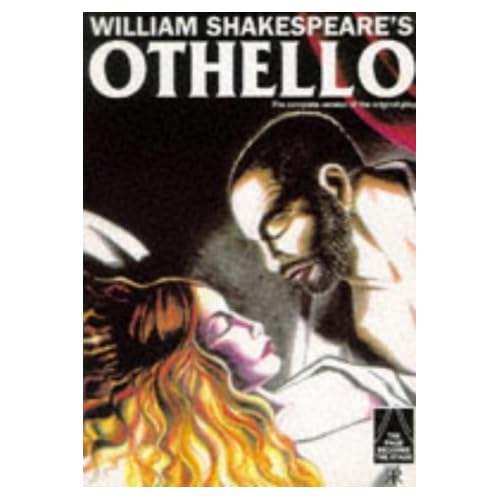
Best know for his collaboration with Alan Moore on A Small Killing, this imaginative adaptation by the Argentinian Zarate is one of the best straight-up comic versions of the original play.


4. Julius Caesar by Wally Wood

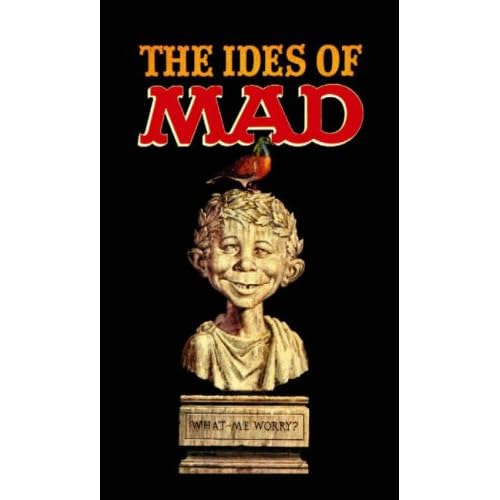
The best comics adaptation of Julius Caesar is a parody of the 1954 Marlon Brando film version, illustrated by Wally Wood and written by Kurtzman and printed in MAD #17. MAD loves the bard, but this early piece is the best. Caesar got the full biographical treatment in Frontline Combat #8 (1952).


5. Batman, Dick Tracy and Spider-Man

Hardboiled Hamlets. All three of these characters are essentially revenge dramas (revenge melodramas?). All three are premised on the death of a father figure and the resulting metaphorical relentless, humourless, hunt for a killer. That's all I've got. I'm sure it's more complicated.

Tuesday, March 11, 2008

Friday, March 07, 2008

Mystery Hoard: Walter Trier


Walter Trier (1890-1951)

Trier was born in Prague but moved to Munich in 1909. He contributed to the German humour and cartoon magazines of the day (especially Kladderadatsch and the left-wing Simplicissimus ) and was equally at home as a caustic satirist and cartoonist and an illustrator of children's stories. His opposition to the Nazi regime led him to flee Germany, finally settling in England (where he produced anti-German propaganda) before emigrating to Canada in the late-40s.

Trier contributed to publications in the UK (Lilliput), Canada and the USA (including many New Yorker covers). A huge talent.

Trier has several pieces (a large archive actually, including many of his sculptures and children's toys) in the permanent collection of the AGO.

You can see some of it here.

I found this old peanut butter jar, capped with a Trier illustration, at an antique shop around the corner from our store. It cost $3.

Thursday, March 06, 2008

Canon II


As various bloggers are reporting, a new report says there were over 3,300 graphic novels published in the U.S. and Canada in 2007. That's quite a bit to keep on top of and illustrates quite handily the value of the various awards and critical lists that are now a major pillar of comics culture. Specifically, the job of actually figuring out what is worth reading (vs reading 9 comics a day or just giving up) and what will continue to be worth re-reading in the future, just keeps getting harder. Not to mention the threat of an avalanche of titles actually huurting sales, as Tom Spurgeon mentions in reference to recent events in France. Heck, the latest Comics Journal, featuring the "Best of 2006" articles, listed over 150 books and strips. Too many? Of course, few people ever ask the question, "Are there too many books?"

One of the traditional tools for separating the wheat from the chaff in book terms is the idea of a canon, which has been discussed alot lately. Since the issue seems likely to become a theme of the comics blogosphere, with new posts daily, herewith some more

Notes: On the Comics Canon

We often imagine one of the requisites for canonical status is immortality --specifically the sort of immortality that exists when the work of one artist is given new life though the work of another, down through the generations. In this sense, early caricaturists like Cruikshank, Topffer, Tenniel, and many others have been canonized by their followers. These artists not only created great art; they created great art that continues to inspire the cartoonists of today. As was said of Wilhelm Busch, they have "stumbled into immortality."

18th and 19th Century

"The want of genuine imagination is always proved by caricature." --Wm. Hazlitt

"I have endured to treat my subjects as a dramatic writer, my picture is my stage, my men and women my players, who by means of certain actions and gestures are to exhibit a show�" --William Hogarth

My own preliminary fantasy canon list would include the work of all those artists dug up by David Kunzle and the great old obscure stuff in Seth's 40 Cartoon Books of Interest. Ideally, all comics readers would be miniature Wimbledon Greens, setting aside an hour every night to pore over an old comic book or ancient print by the likes of Daumier, with nothing but a magnifying glass and perfect silence for company.

20th Century

Ana Merino articulates a feminist critic's position on underground comics by women, relative to the canon: "What I am aiming for is the natural and unprejudiced recognition that will widen the thematical canon of comics and allow those written by women to enter more thoroughly, more easily, in greater quantities and to wider recognition and acceptance."

Ray Zone, in a review of the Masters show, sums up the treatment of comics in U.S. galleries and provides a rough guide to what makes a work of sequential art canonical: "reflexive self-awareness that one is producing lasting art with its own set of parameters."

Tuesday, March 04, 2008

Mystery Hoard: 1940s Comics Used as Insulation

This is a fascinating article about a mystery hoard of old paper found in the walls of an building in Grand Bend, Ontario.

As the boards and nails are pulled from the walls, Bill and Bram Steele were amazed to find the treasures in what was once the Statton home, and Kay’s Do Drop In, main street, Grand Bend.

As the father and son renovate the building to expand BJs Diner, they could not believe how this building was insulted. Valentine cards to Marilyn Statton and stacks of London Free Press 1947-1948 kept the heat in to this small family home. The cards are as clean and pristine as they were 60 years ago. "To Marilyn Statton from Carol Gill" reads one card.

Bram was amazed as he went through the pages of the newspapers and comics the colour as vibrant as it was six decades ago. The first news paper he took out of the wall had a front page story entitled "Grand Bend buys fire truck unit." It was dated Feb 23, 1948.


I love these kinds of stories. Even more, I would love to have more details about these mysterious "comics" that were exposed. As a collector of paper ephemera and old comic strips and comic books, my curiosity is quite agitated. When we moved into our current house, we found some old paper in the crawlspace of the attic. The former owner had worked for the local cab company and there was taxi ephemera, timetables and worksheets, and, most disturbingly, a tiny crutch once used by a child. Not a such a great haul.

Monday, March 03, 2008

Canon Wars


The Scapegoats of Tomorrow

Pity we poor comics canon-builders. Given the raw materials of some Donald Duck comics, political cartoons, and the violent fantasies of misogynist morons, how are we to construct a critical edifice to withstand the schlongs and marrows of outrageous fan opinion and professorial snobbiness?

Over at the newsarama blog, Chris Mautner returns to the subject of canon formation and the American comics canon (or canons: Mautner sees three separate canons championed by fans of comic strips, superhero comics, and so-called literary comics). The whole thing seems to have started as a response to an article by Jennifer de Guzman about the lack of a comics canon or even critical writing on comics.

The discussion leads a few others to offer their own lists, none of which come close to the grandaddy of all such lists, the Comics Journal's top 100 English-Language Comics of the 20th Century list from 1999. Still a far cry from the 3000 canonical works that make up the Western literary canon that Harold Bloom talks about in his 1994 book, but a good start in terms of a list for talking about what is "good" in the books and strips of the last 108 years, and broader than something like the Masters of American Comics exhibit. The Journal list certainly began a discussion, as Douglas Wolk notes in his new book. In a related turn, John Holbo writes on Wolk's Reading Comics, arguing that, despite Wolk's assertions to the contrary, the book actually functions as part of a larger canon-forming movement among U.S. comics critics, or at least is responding to an already existing canon (but not really "smashing" a canon, as the book's dust-jacket and Wolk both insist).

Outside of the usual academic concerns with canon-building (and Mautner's latest post includes a few paragraphs from David Ball, professor at Dickinson College), and as much as I love lists, I wonder how useful these lists are, especially as currently formulated. Will any of these comics still be considered great 10, 20, 50 or 100 years from now? Does it do any good to look at these things out of context? Shouldn't we consider, at least, cartoon books of the 19th Century? In practical terms, wouldn't a decade-by-decade survey of great U.S. comics, or a list that confined itself to U.S. graphic novels be more edifying? Lumping together open-ended serials, gag-a-day strips, and consolidated narratives really muddies the waters and limits any kind of focus to the most basic formal similarities.

The nature of comics criticism and the general appreciation of comics worldwide has opened up considerably over the last decade, with groundbreaking anthologies like Dan Nadel's Art Out of Time, Todd Hignite's Comic Art, Bart Beatty's Unpopular Culture, and the explosion of translated manga really transforming the way many of us think about comics and comics greatness, but the real "job" of canon formation is really going on in the Academy, in dozens of undergrad introductory courses in "The Graphic Novel" and post-grad seminars in "Sequential Narrative."

While the Academy has canonised many members whose names half a century later are forgotten, or are remembered only to be called up with a smile or a shrug, it has persistently ignored those who have employed the pencil instead of the brush, or have used ink instead of misusing paint. But it is unnecessary to pursue the subject farther; that the names of Keene, Leech, and Tenniel are not on the roll of the Academy is surely far more to the discredit of the institution than of the artists themselves, who presumably, from the Academic point of view, are "no artists." As Mr. du Maurier has pointed out, Punch's artists will have their revenge: "If the illustrator confine himself to his own particular branch, he must not hope for any very high place in the hierarchy of art. The great prizes are not for him! No doubt it will be all the same a hundred years hence—but for this: if he has done his work well, he has faithfully represented the life of his time, he has perpetuated what he has seen with his own bodily eyes; and for that reason alone his unpretending little sketches may, perhaps, have more interest for those who come across them in another hundred years than many an ambitious historical or classical canvas that has cost its painter infinite labour, imagination, and research, and won for him in his own time the highest rewards in money, fame, and Academical distinction. For genius alone can keep such fancy-work as this alive, and the so-called genius of to-day may be the scapegoat of to-morrow." ---The History of Punch by MH Spielmann, 1895


Saturday, March 01, 2008

The List: Lists and the Listing Listers Who List Them: The 100 Best Reviewed Comics of 2007

Blogger Dick Hyacinth has finally posted his list of 100 comics and graphic novels from the myriad end-of-year "best of" lists, both online and in print --a huge variety of sources (Hyacinth lost track). A monumental undertaking, the list has quite a few great books on it. It also has many books that will be either obscure or entirely new to many readers, myself included. The two major features of the list are the lack of superhero comics and lack of manga, the subject matter of roughly 90% of all internet noise concerning comics and, I suppose, based on bestseller lists, the largest income generators.

I love lists like this even though, like bestseller lists, they are never going to be a scientific guide to quality. But I will settle for popular, especially since there are so few comics reviewers whose taste, comics knowledge, focus or worldview is developed and consistent enough to make reading them on a regular basis worthwhile. Beyond the occasional Tom Spurgeon review and the Comics Journal, my reading of reviews if fairly scattershot and inconsistent. I'll click on a link at the Comics Reporter or Journalista, but I'm more likely to read a review if I feel it's not likely I'll actually read the book (for instance, I might read a review of the new Iron Fist series written by Ed Brubaker or a review of a new manga series intended for teenage girls like Shugo Chara, #44 on the Canadian bestseller charts this week). On the other hand, once I've read something, I'm curious what other readers experience of the book was and will often hunt down a favourite reviewer's thoughts on the matter. But I'm more likely to seek out a long, considered piece of criticism more than the short bookchat-style review that is the stock-in-trade of most blogs and newspapers and one of Gore Vidal's famous betes noires. You know, Donald Phelps vs Publishers Weekly.

Anyway, a very interesting list. My own list would have maybe put Alias the Cat over Scott Pilgrim, and Shortcomings over Exit Wounds (and most of the classic comic strip collections like Popeye and Walt and Skeezix over everything else), and I would have had more anthologies, but why quibble with a machine-made list?

Friday, February 29, 2008

Superman is a Leap Year Baby!


Comics fans have long known that Superman's extraordinary vitality and youthfulness are due in part to the fact that he celebrates a birthday only once every four years. Yes, today, February 29, is Superman's birthday, and people are celebrating, as this messageboard indicates.

Long a letters page staple, the explanation that Superman ages slowly because of his odd birthday could only appeal to an idiot or a long-time comics reader like myself. If my memory serves, over the years this legend has been added to with sci-fi factoids that reference the planet Krypton, the length of its days, etc. Just the sort of thing to delight a young otaku but guaranteed to annoy the casual fan. My understanding is that the Superman editors (perhaps Mort Weisinger or maybe E. Nelson Bridwell or Julie Schwartz came up with the notion, who can say?) cribbed the idea from Capt. Marvel, the prototype for much of Superman's mythology and extended family. Marvel's birthday is first mentioned as far back as 1943 in Whiz Comics #47 and is firmly established in Whiz Comics #52 (Mar. 1944) --a story probably written by Otto Binder who also wrote many of Superman's greatest adventures. Capt. Marvel in turn may have borrowed the idea from Harold Gray's Little Orphan Annie. Readers were no doubt anxious to understand why Annie did not seem to age like Skeezix of Gasoline Alley and the Leap Year idea is an answer befitting the whimsical yet earnest adventure strip.

In any regard, this year is the 70th anniversary of Superman's publication in Action Comics #1 and there are celebrations planned throughout the year. By my count, since 1938 Superman has had 18 birthdays...

More:

Superman is in good company, as this site notes.


Mark Evanier delves into the question here, here and here.

capt. marvel birthday whiz comics 52 1944 cc Beck

Tuesday, January 29, 2008

What Would Captain America Do?


Marvel Comics Editor-in-Chief Joe Quesada is scheduled to appear on the Colbert Report tonight, ostensibly to plug the return of Captain America to comic books this week. Quesada appeared on the show during the hype over the death of the character last year but this time he will have to cross a picket line of striking WGA writers to do it. As this discussion and others indicate, Quesada, a comic book writer as well as an executive, will effectively be acting as a scab or strikebreaker when he appears on the show. Fans of the comics should ask themselves, would Captain America cross a picket line?

----
Related: Mark Evanier answers the musical question, "Why picket?"

(image by downside)

Saturday, January 26, 2008

A Second to Wreck It

Beastie Boys fail to ask the musical question, who's more fascistic, Superman or Lex Luthor?